
Herringbone and chevron are the two patterns people picture when they think of a classic New York apartment floor. They are also harder to lay than a straight plank floor, because every piece has to line up with its neighbors across the whole room. NYC Floor Pro has served New York City since 2011, with over 30 years of hands-on flooring experience, and we install and refinish both patterns in Manhattan apartments, brownstones and stores.
Herringbone or chevron?
In a herringbone floor, the boards have square-cut ends and meet at a right angle, which makes a broken zigzag. In a chevron floor, the ends are cut at an angle, so the boards meet in a continuous V. Herringbone looks traditional and fits well in pre-war buildings. Chevron looks cleaner and more graphic. Both look good in white oak, and both can be stained any color you like.
What a pattern floor involves
- Over a wood subfloor, we nail down or glue and nail the floor, after the subfloor is checked for level and squeaks.
- Over concrete, we level the slab, install soundproofing and glue the floor down.
- Unfinished wood is sanded, stained if you want a color, and finished on site.
- The wood usually acclimates in your apartment for about 1 week before installation. Most projects then take a few days to 2 weeks, depending on size and layout.
Recent herringbone and chevron projects
Pre-war co-op herringbone Upper East Side, new installation
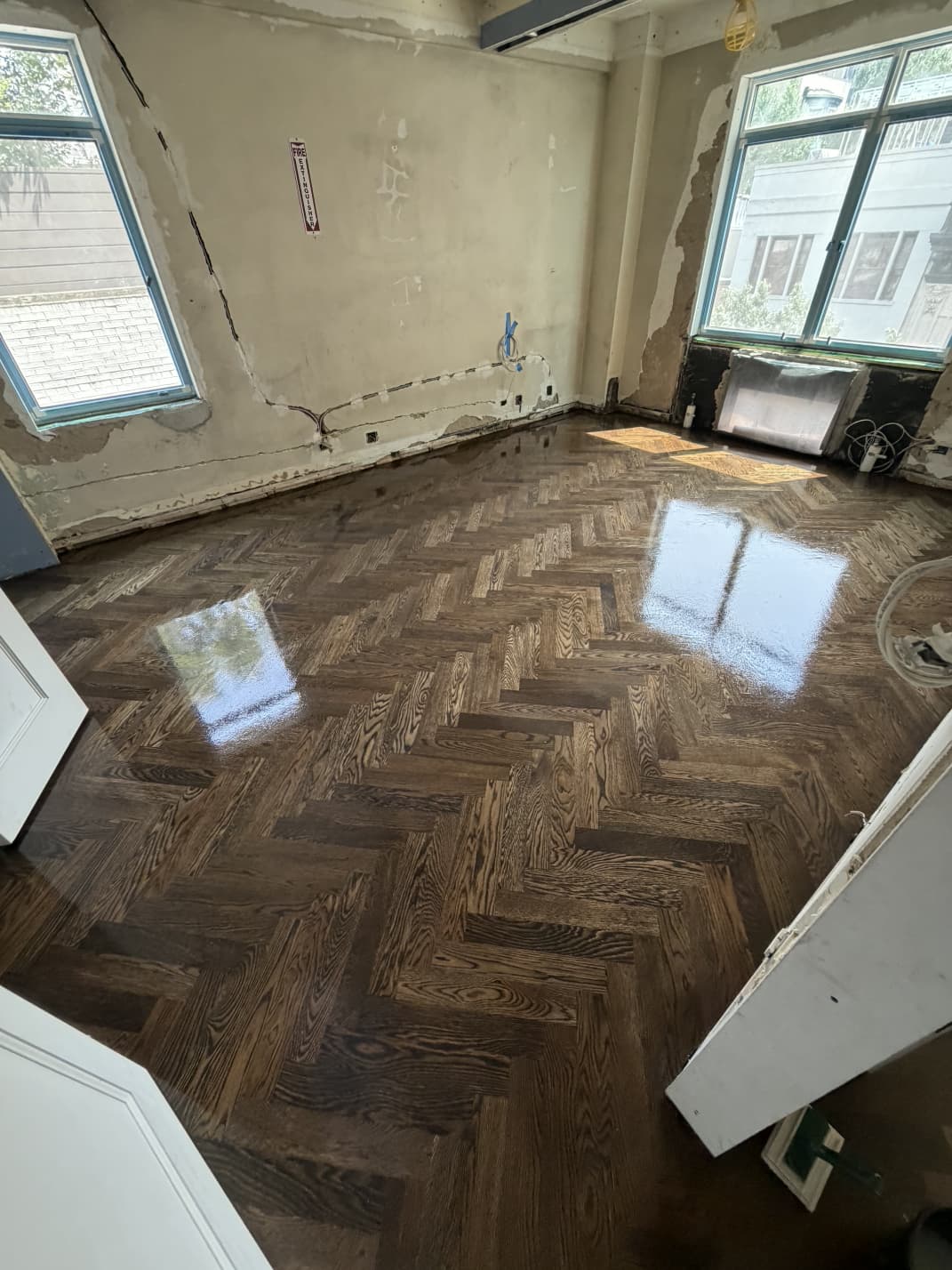
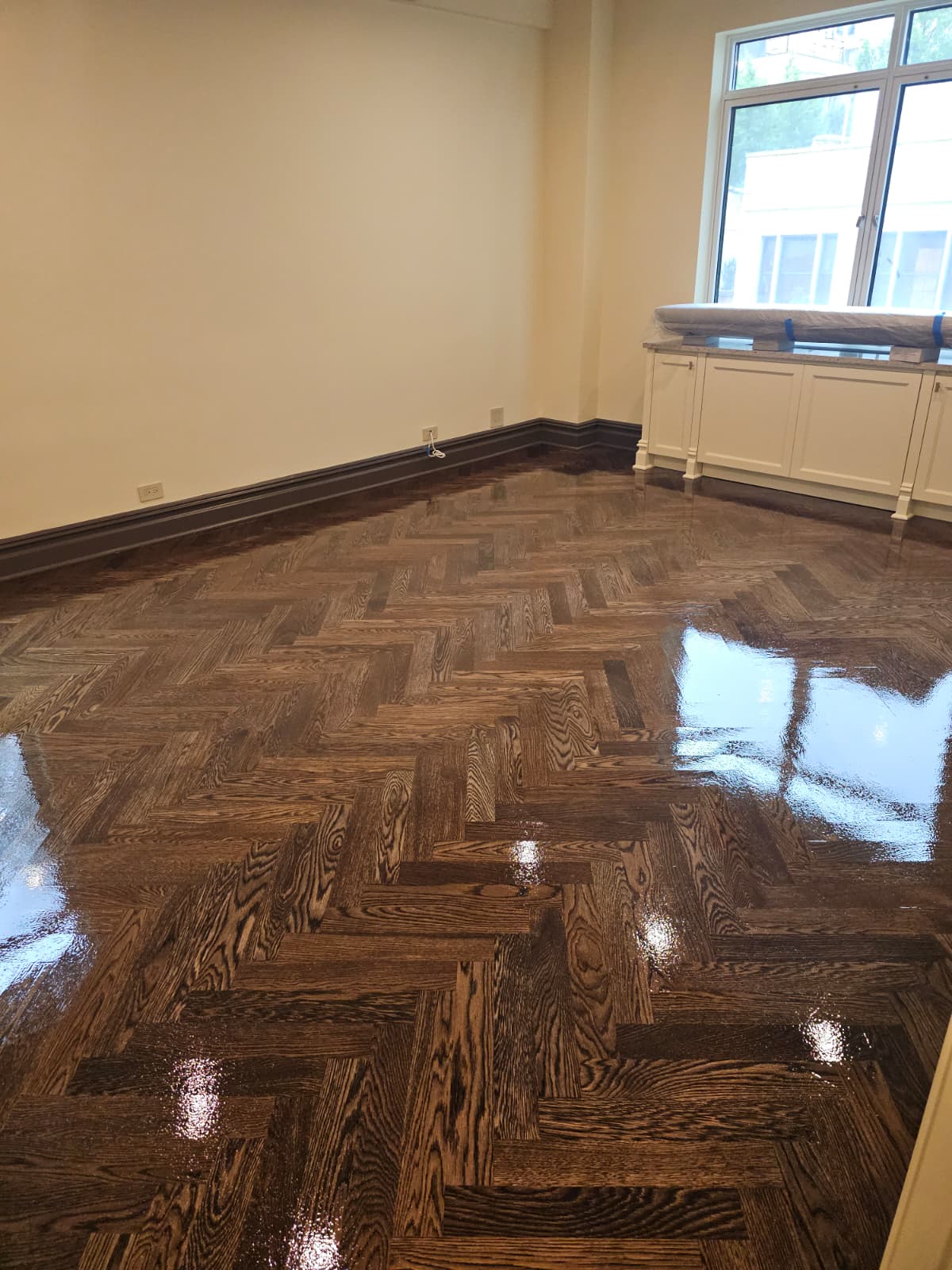
Installed 1,200 square feet of unfinished white oak herringbone, 3-1/4 by 18 inch pieces, glued and nailed over a plywood subfloor, stained dark walnut with a satin finish.
Brownstone herringbone Upper West Side, full replacement
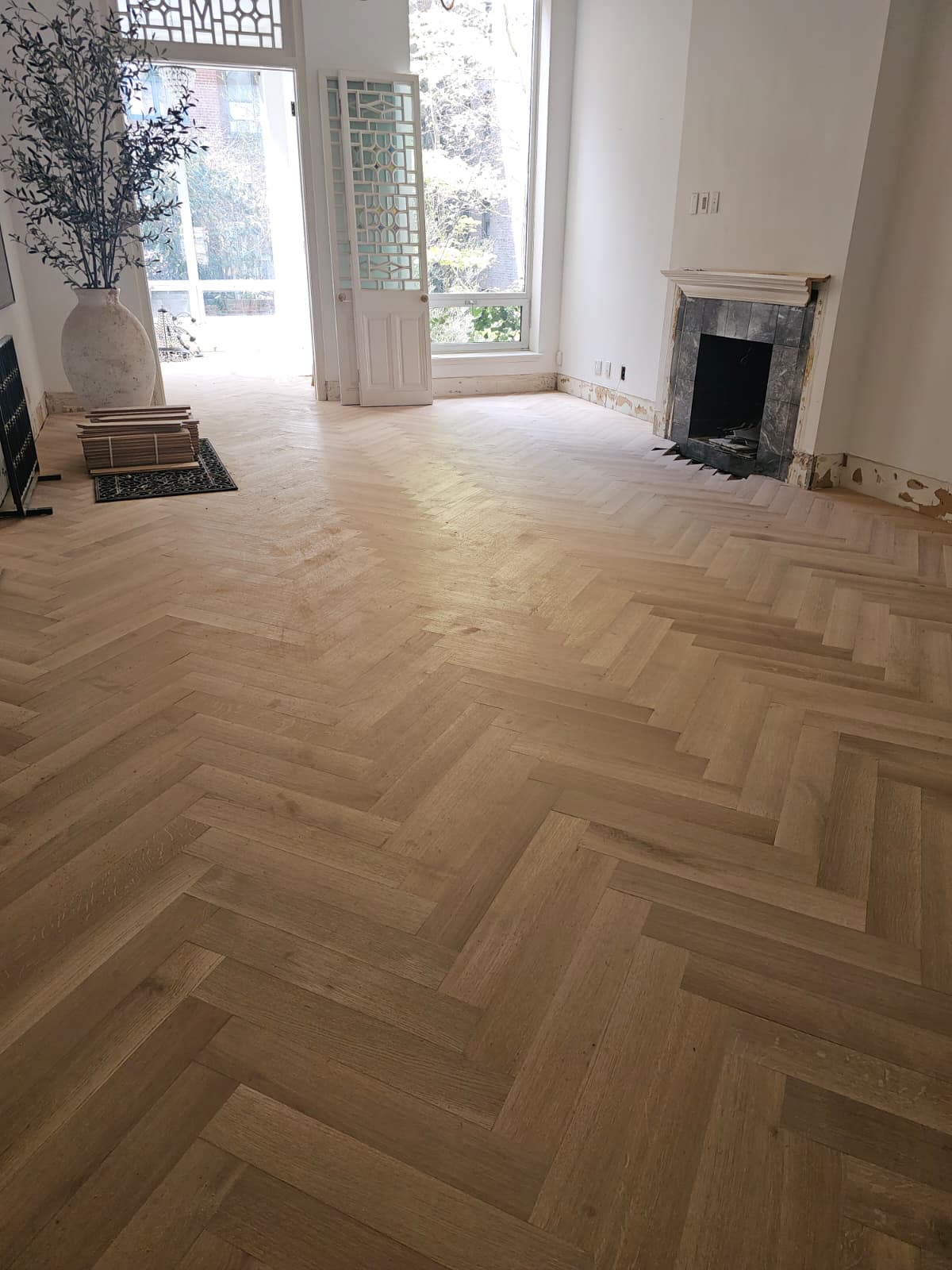
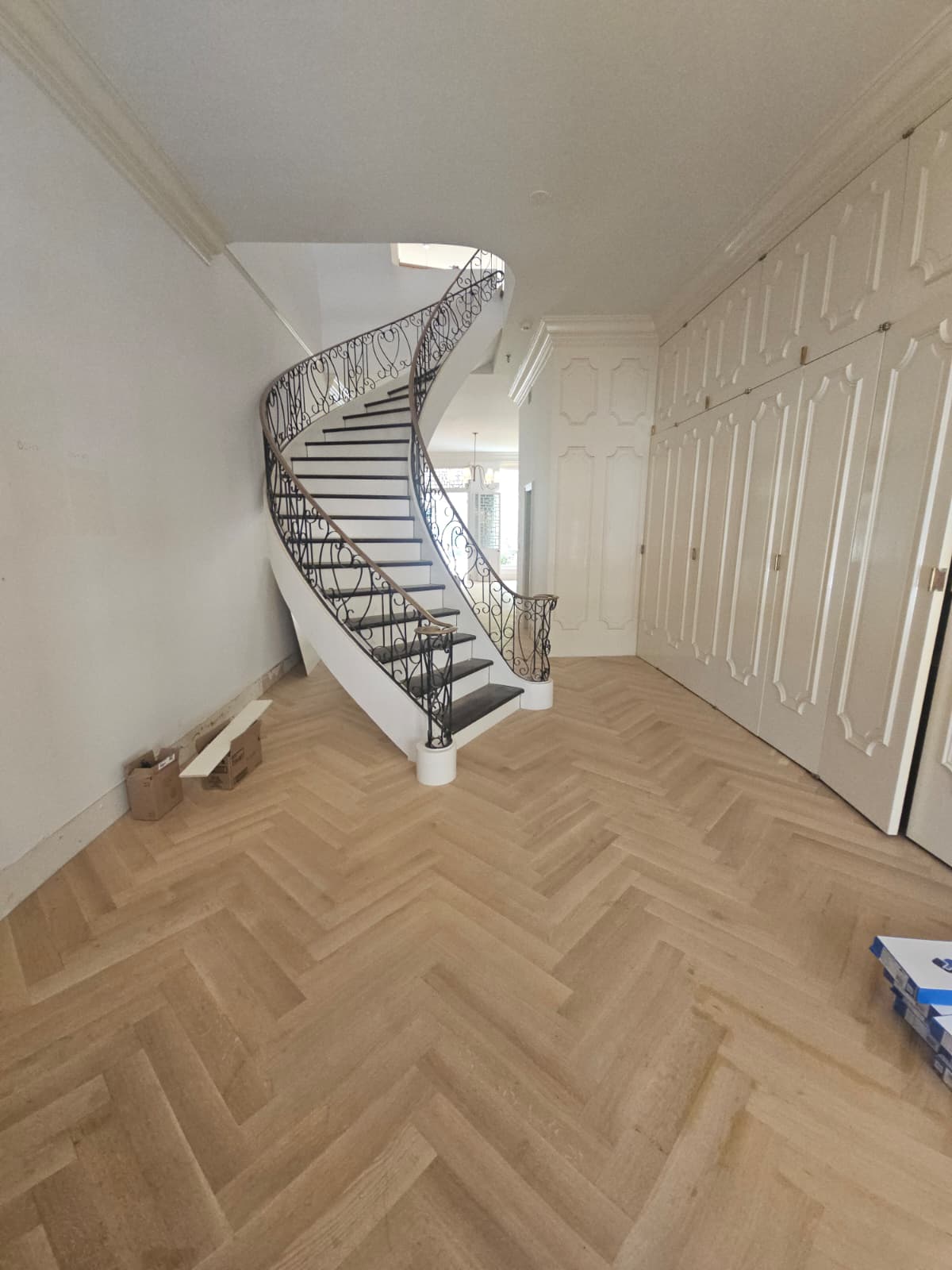
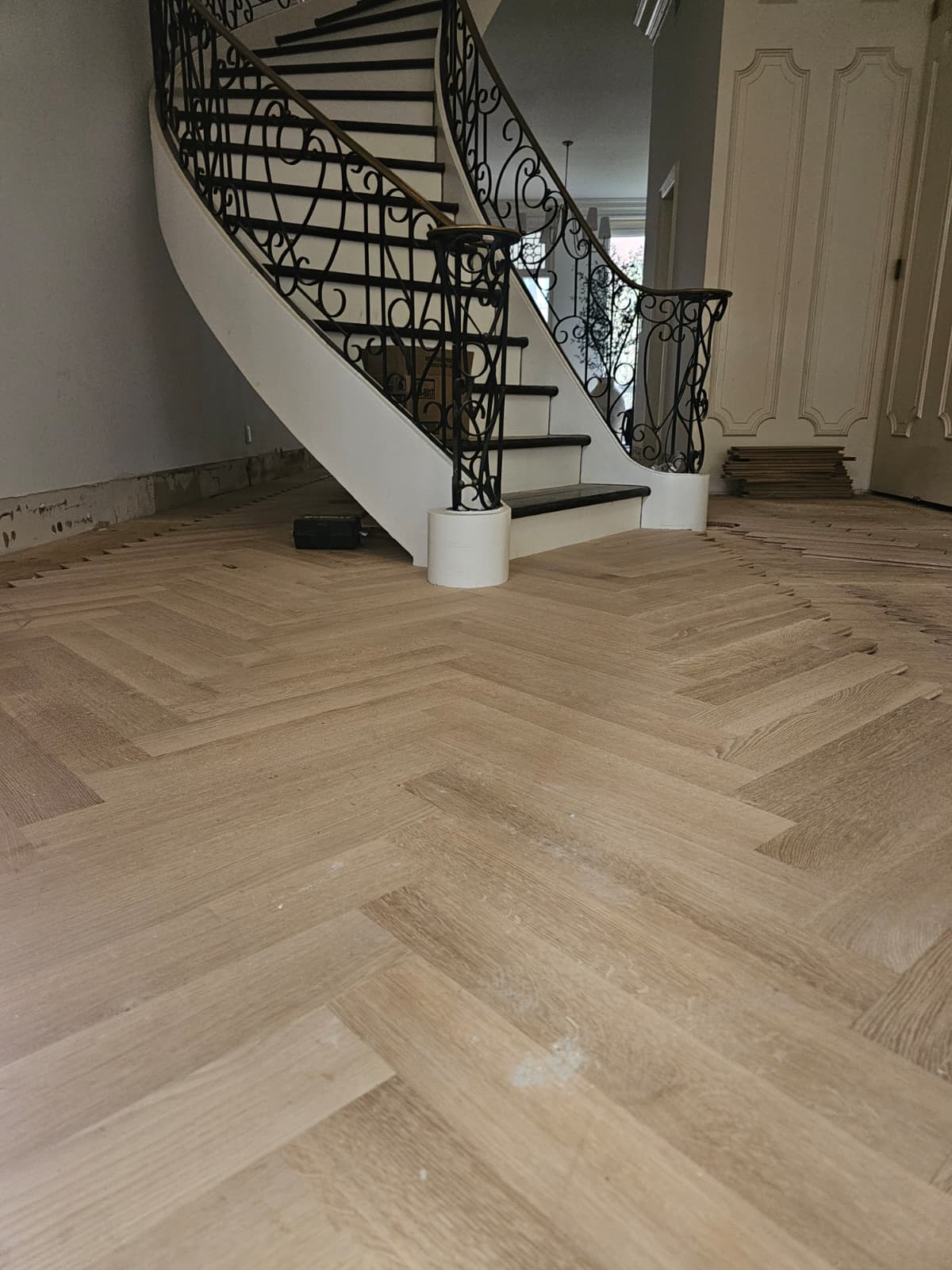
Replaced 4,000 square feet of flooring in a brownstone. The old floor and subfloor came out because of squeaks, and new plywood went down, leveled and secured to eliminate them. Supplied, installed and finished white oak herringbone, 3-1/4 by 18 inch pieces, with a natural water-based Bona Traffic HD satin finish.
White oak chevron Midtown East apartment, full replacement
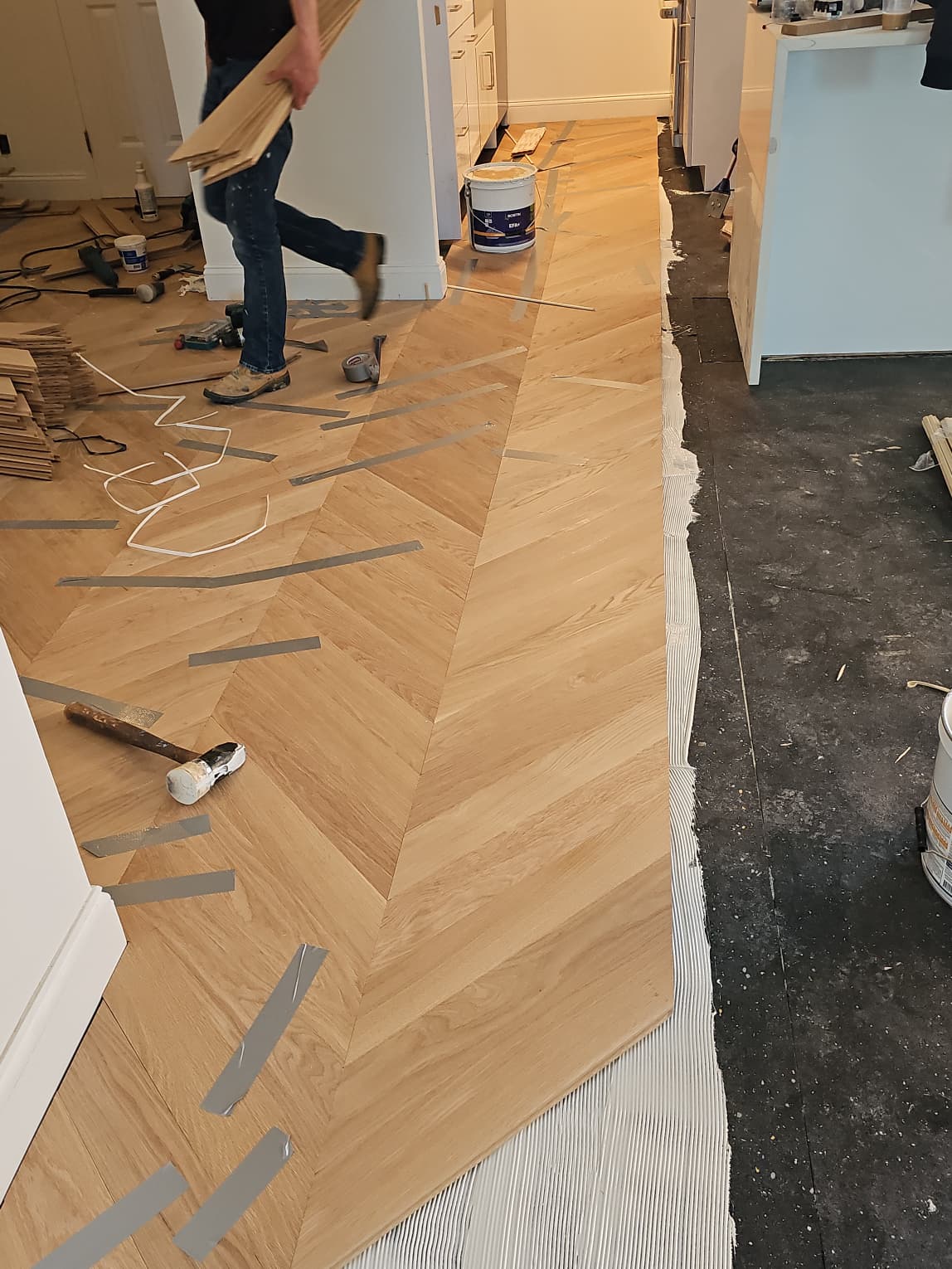
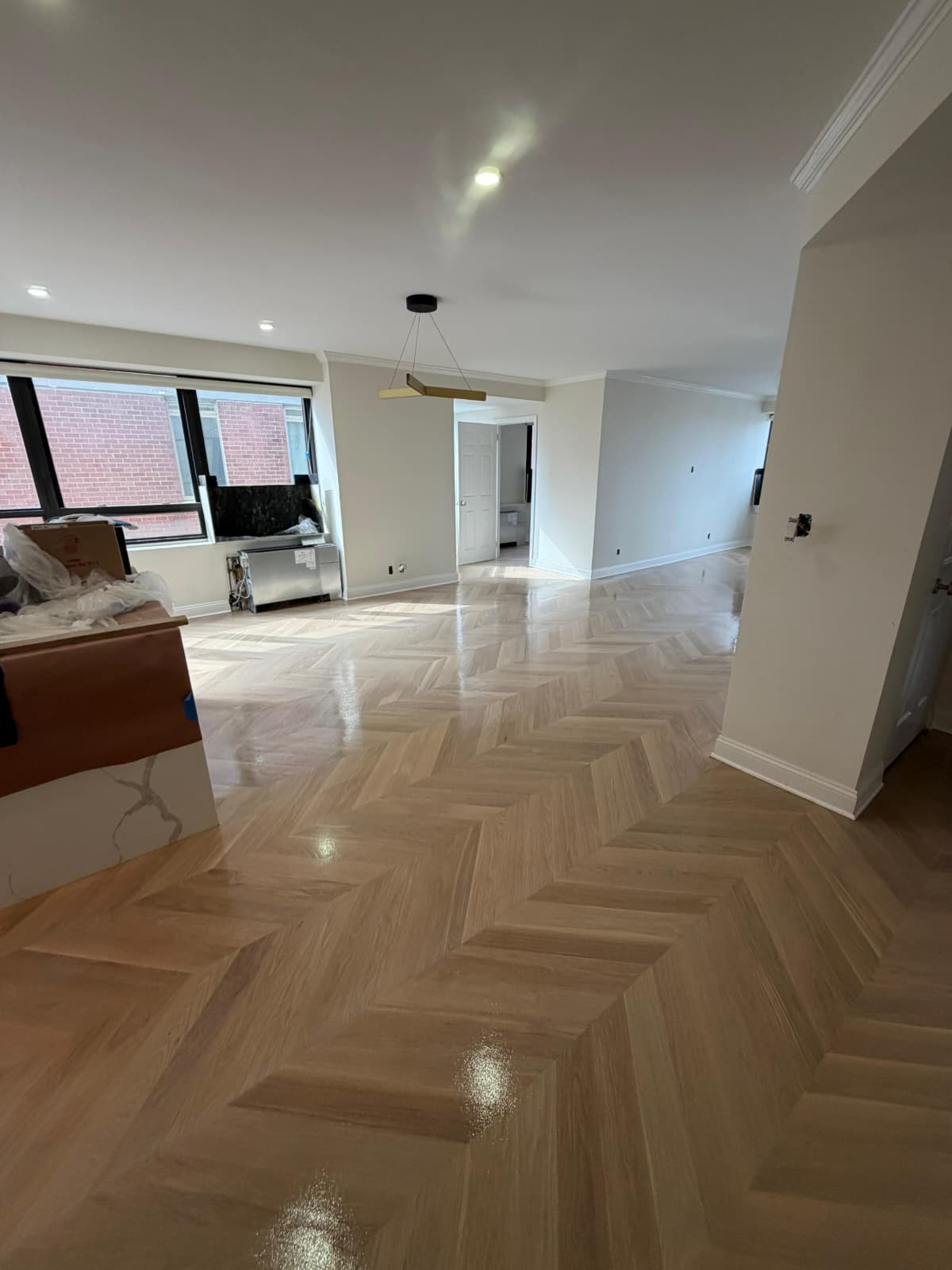
Replaced the old floor completely. We leveled the concrete, installed soundproofing, and supplied and glued down 1,500 square feet of solid white oak chevron, then sanded and finished it.
Walnut herringbone refinishing Bucherer 1888, Madison Avenue
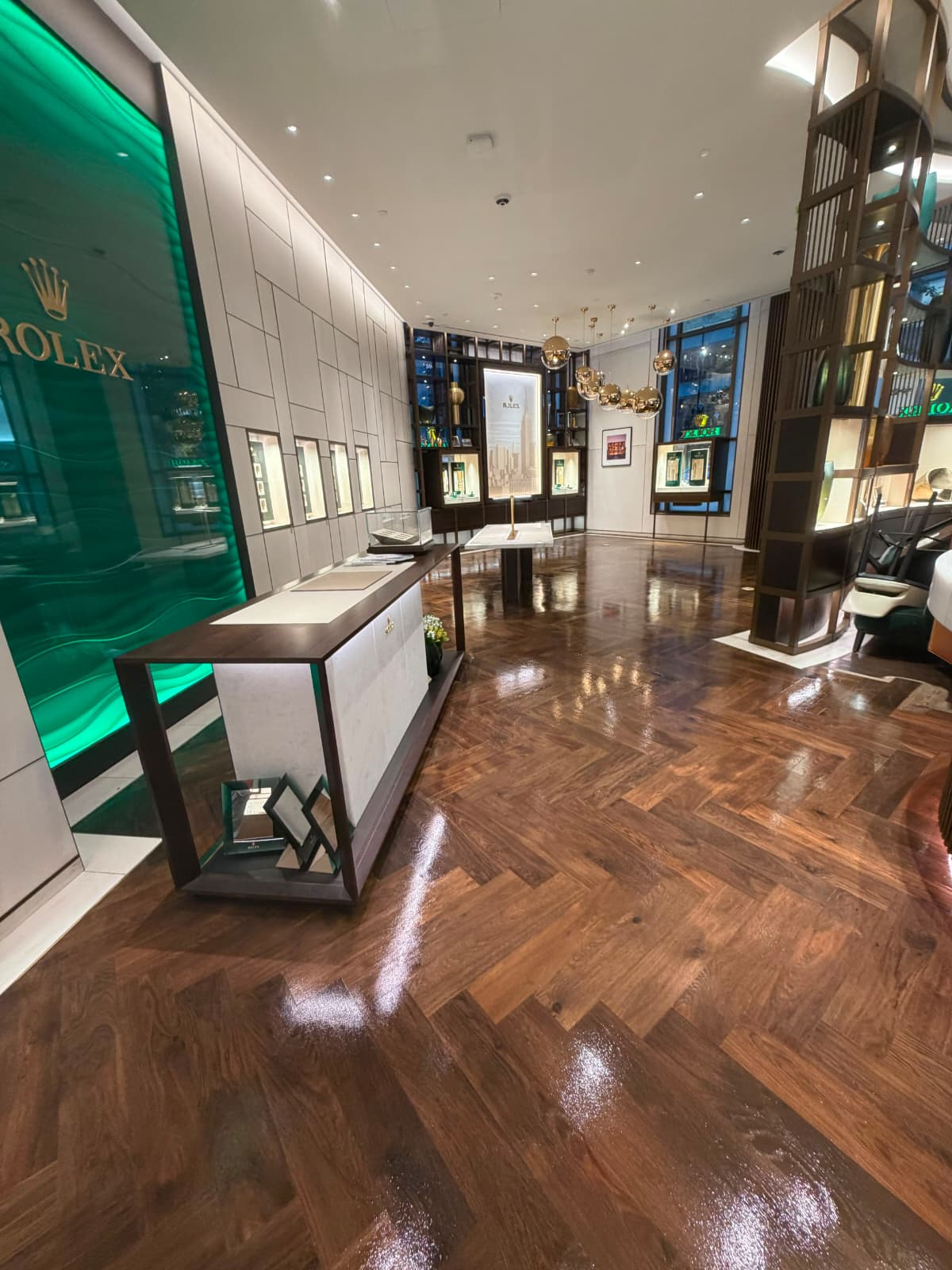
Not a new installation: we sanded and stained about 10,000 square feet of walnut herringbone with a neutral stain and a satin finish, overnight in phases. See wood floor refinishing in NYC.
Planning a pattern floor in a Manhattan building
Flooring projects in Manhattan co-ops and condos need management approval, not board approval. Your managing agent will usually ask for a scope of work and a certificate of insurance. We are licensed by the DCA as a home improvement contractor and carry all necessary insurance, including $5 million in umbrella coverage, and we issue the certificate once the agreement to move forward is signed. For the full picture, see our Manhattan hardwood floor installation page and our cost guide.
Common questions
1. What is the difference between herringbone and chevron?
Herringbone boards have square-cut ends and meet at a right angle, which makes a broken zigzag. Chevron boards have angle-cut ends and meet in a continuous V.
2. How much does a herringbone floor cost in NYC?
Herringbone floors cost $45 to $55 per square foot, depending on the size of the project, the plank type and the wood species. We confirm the exact price after a site visit. For chevron, we price it after a site visit too. See our cost guide.
3. Can you install herringbone over concrete?
Yes. Over concrete we level the slab, install soundproofing and glue the floor down, as in our Midtown East chevron project.
4. Can pattern floors be refinished?
Yes. We refinish both solid and engineered pattern floors when the veneer is thick enough. We have sanded and refinished walnut herringbone at Bucherer 1888 on Madison Avenue.
5. Do you use solid or engineered wood?
Both are possible, even over concrete. Our Midtown East chevron project is solid white oak glued down over a leveled slab with soundproofing.
6. How long does installation take?
The wood usually acclimates for about 1 week before installation. Once the crew starts, most projects take a few days to 2 weeks, depending on the size of the project and the layout.
7. Do I need board approval in a co-op?
No. Flooring projects need management approval, not board approval. Check with your managing agent before you order wood.
Request an estimate
Call 718-316-5330 or email nycfloorpro@gmail.com. NYC Floor Pro, 238 East 60th Street, New York, NY 10022.




